
Historic Native Arts Convening (the First of Many)
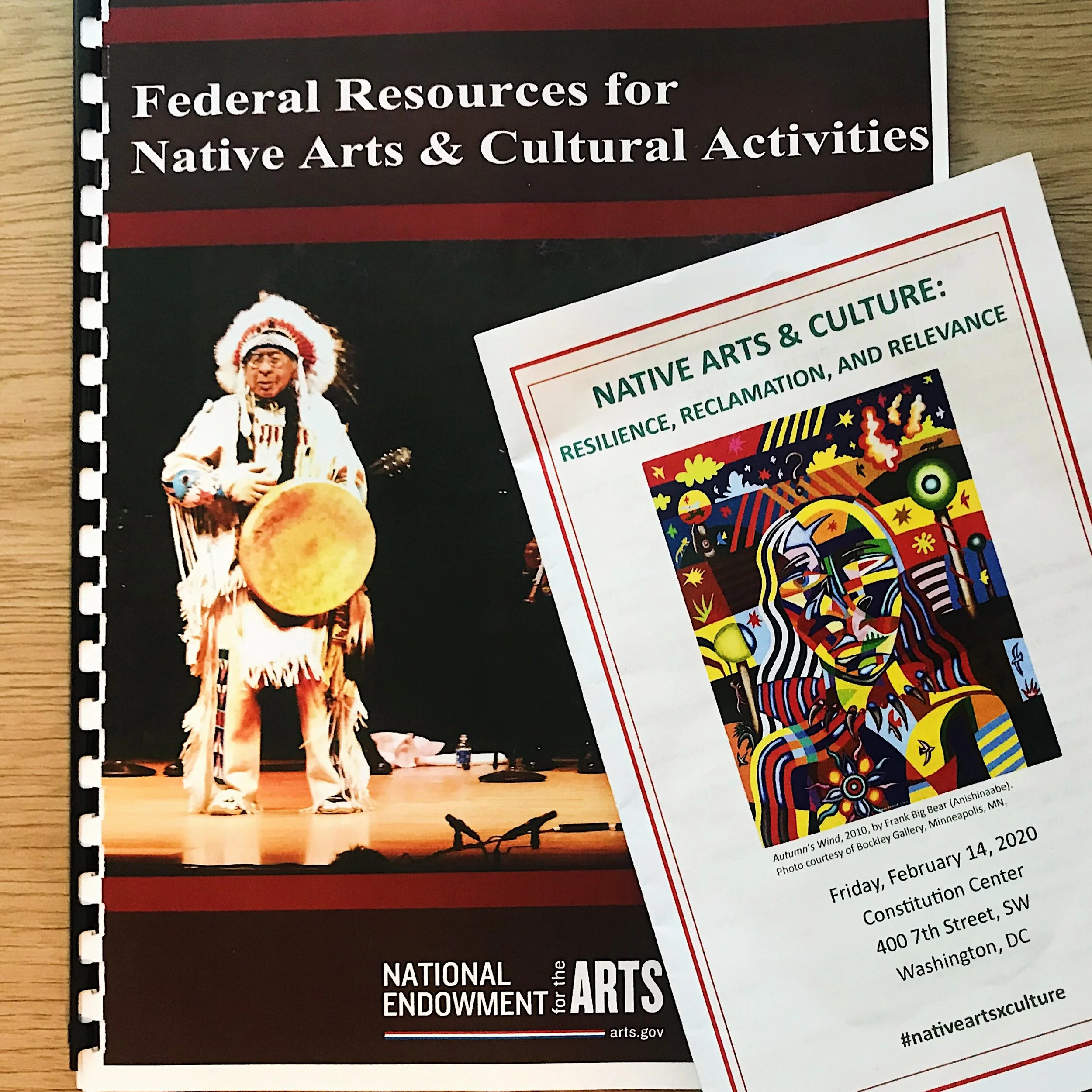
after some rest, I look back at last week’s Historic convening centering Native people and see it as an Announcement. an Announcement that this insurgence of Native creativities in the american narrative is not a blip and will no longer hide as an * and a hardship for the institutions built on Our Ancestral Lands.
after some rest, I look back at last week’s Historic convening centering Native people and see it as an Announcement. an Announcement that this insurgence of Native creativities in the american narrative is not a blip and will no longer hide as an * and a hardship for the institutions built on Our Ancestral Lands. Miigwetch to the National Endowment for the Arts, National Endowment for the Humanities, and Native Arts and Cultures Foundation for creating the space for this work to intermingle & for an invitation to the microphone.

Important message and sweet thank you from NEA Chairman Mary Anne Carter
as someone who had the privilege of seeing the full process that brought this historic moment into being, it is a wonder to see it come to fruition and the creation of momentum that we must harvest. Chloe Elm (Tonawanda Band of Seneca Indians of New York), who I have yet to meet but began the process of the Federal Resource Guide, collected the mass of information that then I was able to help sculpt. to witness its Debut, I felt the importance this type of information holds to Access of Resources My Ancestors Signed a Treaty For and The Sovereign Right of Native Nations to Them. Information is the only way to lead to True Self-Determination.
now, as always, must come next steps.
for myself, they have yet to form beyond questions:
how do we share this information and utilize our networks?
how do we share that resources are beyond monetary and provide capacity building as well?
where does the mentorship within the Community live and how do we bridge these connections?
who can we call on to join us in the conversation? who must we highlight next & who must be present to not only hear, but Truly Listen?
there are also questions I have for myself:
how do I serve my people, who both fit the name of Arizona and Anishinaabe who come from Miskwaagamiiwi-zaaga’iganing?

Joy Harjo (Mvsoke), U.S. Poet Laureate, providing the convening keynote speech & performing her poetry
while these statements before and after are simply Mine Alone, not of the institutions I serve or the places I come from, I am a public servant in all senses, but to serve, I cannot lose sight of myself being part of my created public.


I am a dual citizen—considered both a citizen of the united states and most importantly, a Citizen of the Red Lake Nation. I am not a machine nor am I the necessary piece to solving the issues settlers created on My and Others’ Ancestors’ Backs. I alone cannot solve the issues embedded in The Work. But if I am going to continue doing this Work, I will not lose myself to It. I am where I am now in my life because no longer have shame and do not regret Centering My Indigeneity in my career and everyday being.
I continue forward now with enthusiasm about the next steps that will take place soon. I live beyond the fears of my Ancestors’ earth problems, for now I am only shaped by their Dreams.
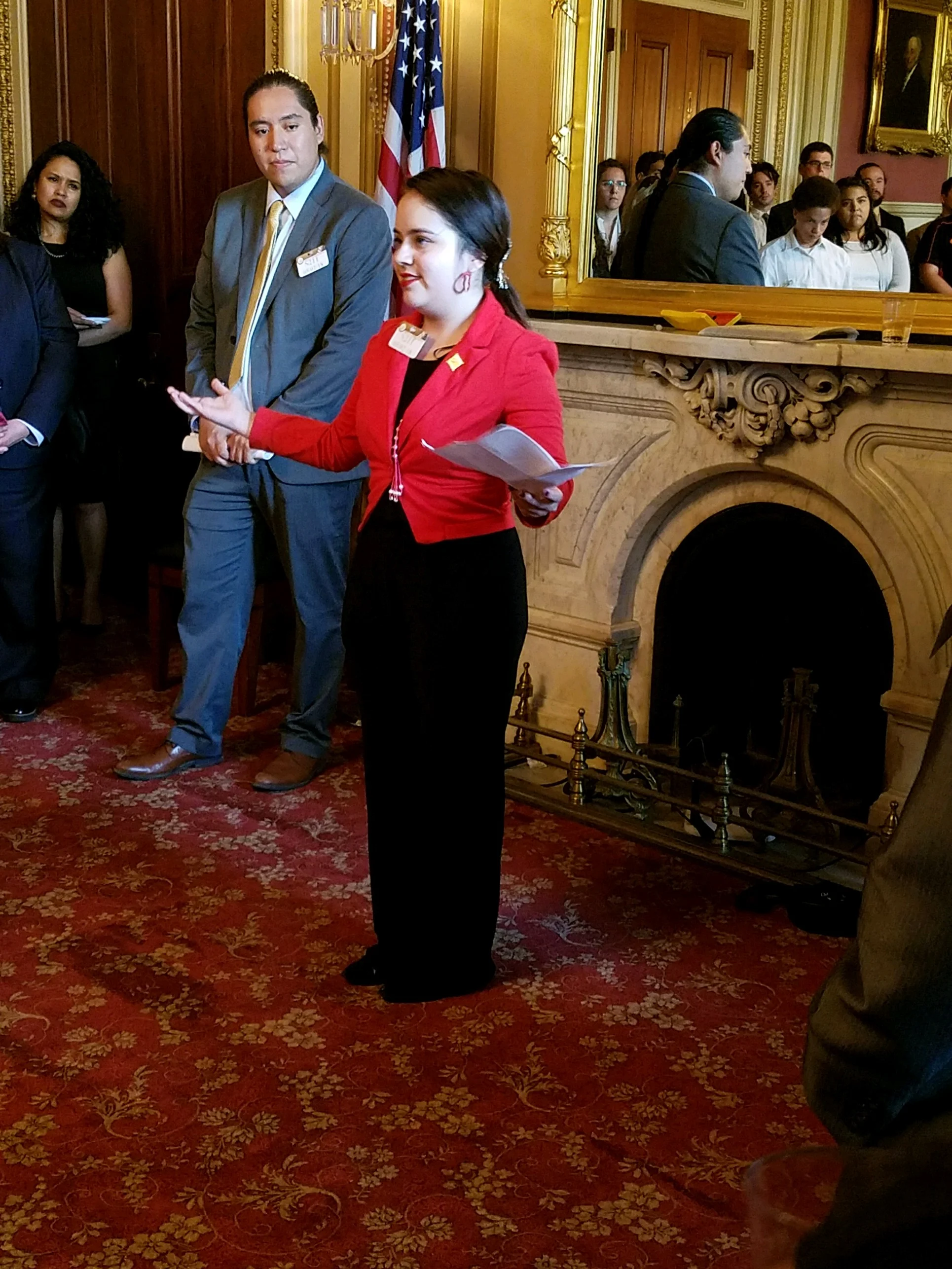
Remarks on Capitol Hill (May 2nd)
“Boozhoo! Ogimaikwee Ndizhinkaaz. Red Lake ndoonjibaa. Wawaazisii nindoodem…
“Boozhoo! Ogimaaikwe Ndizhinkaaz. Red Lake ndoonjibaa. Wawaazisii nindoodem.
Hello! My name is Ogimaaikwe, which in English means Boss Woman and given to me by my grandfather, but my name is also Anna Needham. I come from Red Lake. Bullhead is my clan. I am Annishnaabe. But I would also say that I did not get enough of my culture growing up. I was born in Colorado and raised in Arizona. I went to school in New York. I visited Red Lake every summer, but that does not feed you a culture. I know what goes on there through their news site. I got a taste thanks to my father. But I would still say that is not enough. I do not know as much about my culture and my people as you all. And I am so thankful that “knowing your culture” is the majority.
That is what the future must look like. That is the present and future this group has and continues to work towards. I cannot tell you about how much joy I get in seeing this group time and time again in institutions that did not originate with them in mind and see them take up space as well as be in spaces made by previous generations for us. Because we are worthy. We always have been.
Now our work begins in going back to our homes and sharing our knowledge. Or for some, to really take the time to bring ourselves truly home for the first time. And we must share our stories. We must present the idea that we exist in the present by simply being and continuing to engage. The culture of America must change for then the policies will change. We all have the power to change the perception of indigenous peoples in America because we already have simply by being here. We have already started for it is the work our ancestors that we have continued. We come from very different nations and cultures, and that must be voiced. Our truths must be voiced. Our joy and pain must be voiced. We already have the microphone in front of us. Now we must share our stories because then we share our humanity. We are not mascots. We are not historical figures in museums. We are not caricatures. We are human beings, here, now and ready to show you who we are, whether you are ready or not.
That is the work I want to do for the rest of my life. Tell our stories and help other indigenous people tell theirs. As a lifelong theatre person and general art geek, I love stories. I have loved to hear of all of your stories and cultures and traditions and how ingrained in your life it is. Especially, with our two Native Hawaiian colleagues, I have gotten to learn how different Hawaii is to the mainland, and yet so similar. It is inspiring how ingrained it is and I hope to see it become normal. Normal for Natives to practice their traditions. Normal for Natives to be ourselves in the complexities of our lives, traumas and all, moving towards healing.
We walk in two worlds. We must continue to acquaint them. We must continue to live in both. We must lift those younger than us and use our knowledge to help our communities. We must look to our lives before colonization to feed how we move forward. But we must find the strength to move forward. Our cultures depend on it.
Each of us came here for different reasons. I came here to learn something I never could at NYU. I came to learn it all through you all. I am so thankful to this group, because for the first time, I did not have to decode things from my life. I did not have to explain pow wows or Indian tacos or rez dogs or regalia or anything related to my identity. You all have enriched my life with yourselves and your stories.
With this type of group, a group of Native youth together or even a group of Natives at all, time and time again, we were told was rare. I don’t want to see it be rare anymore. I don’t want to see us as an asterisk, in the footnotes, under the radar. We deserve to be center stage and we must work together to ensure our voices, our needs, our sovereignty as Native nations is seen. So all I ask is, keep up the work and keep everyone updated of your stories. They are the most valuable things you have.
Miigwich.”
-Written for AT&T’s Center for Indigenous Politics & Policy at George Washington University Native American Political Leadership Program reception in the Johnson Room in Capitol Hill